When you think of the golden era of American muscle cars, names like Mustang, Camaro, and Cuda usually dominate the conversation. But in 1971, while the “Big Three” Detroit automakers were busy detuning engines and softening their body lines due to rising insurance costs, American Motors Corporation (AMC) decided to throw out the rulebook entirely.
The result? The radically redesigned, second-generation 1971 AMC Javelin.
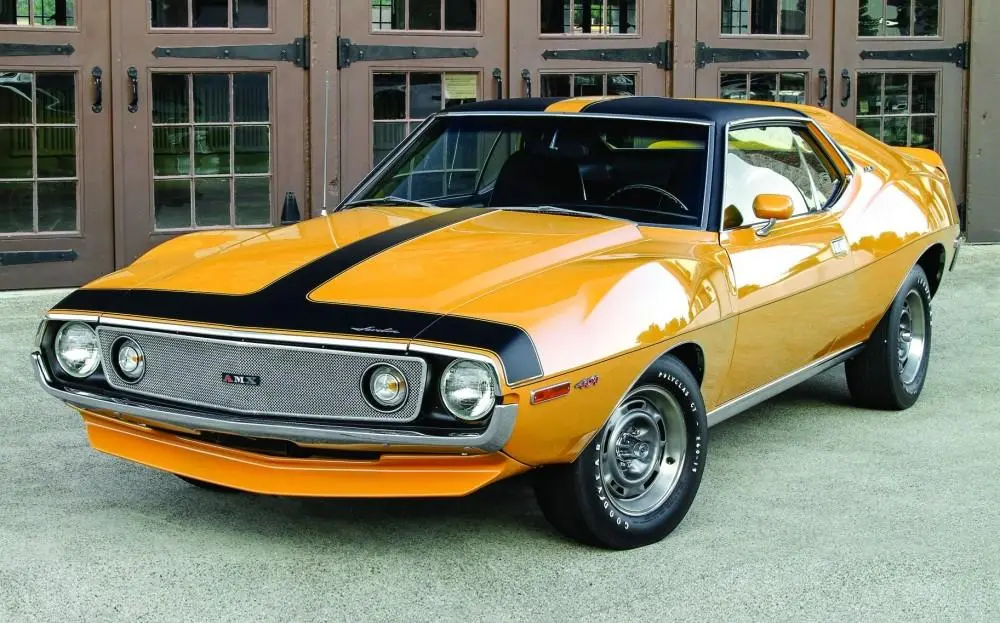
Instead of blending in, AMC design chief Dick Teague crafted a machine that looked like a factory-built custom street outlaw. It was a bold gamble that created one of the most distinctive silhouettes of the 1970s.
The first thing that hits you when looking at a 1971 Javelin is its sheer physical presence. The car grew an inch longer in wheelbase, over three inches wider, and gained a much lower, more aggressive stance compared to the first-generation models.
But the real magic is in the sheet metal:
If the exterior looked ready for the race track, the interior looked ready for the launchpad. AMC completely threw away the traditional, flat, split-bench layouts of the late 1960s.
Instead, they introduced a asymmetric, sweeping dashboard that wrapped tightly around the driver. Everything from the radio to the optional Rally-Pac gauge clusters (featuring a “Tick-Tach” clock/tachometer combo and a blistering 140 mph speedometer) was angled entirely toward the driver’s seat. Coupled with high-back, foam-cushioned vinyl bucket seats, stepping into a ’71 Javelin felt exactly like climbing into a fighter jet or an open-wheel race car.
AMC didn’t just talk a big game on styling—they backed it up with some of the sturdiest small-block V8 engines ever built in Kenosha, Wisconsin. While a dependable 232 cubic-inch inline-six was the base powerplant for standard Javelins, true muscle enthusiasts looked straight to the V8 options.
The mid-tier option was the high-compression 360 cubic inch V8, pushing out a healthy 245 to 285 horsepower depending on whether it was paired with a 2-barrel or 4-barrel carburetor.
But the undisputed king of the lineup was the 401 cubic inch V8. Featuring an incredibly tough forged-steel crankshaft and matching forged rods directly from the factory, the 401 was highly over-engineered. In 1971, this monster breathed through a 4-barrel Motorcraft carburetor and a dual-exhaust system to pump out 330 gross horsepower and a massive 430 lb-ft of torque.
When paired with a 4-speed manual Borg-Warner T-10 transmission and a Hurst shifter, a 401-equipped Javelin could blast down the quarter-mile in the mid-14-second range at nearly 100 mph—making it a terrifyingly fast underdog capable of keeping up with any big-block machine on the strip.
The 1971 AMC Javelin proved its worth on the ultimate stage, winning the grueling SCCA Trans-Am racing championship series in 1971 and 1972 under the legendary Penske Racing team with driver Mark Donohue.
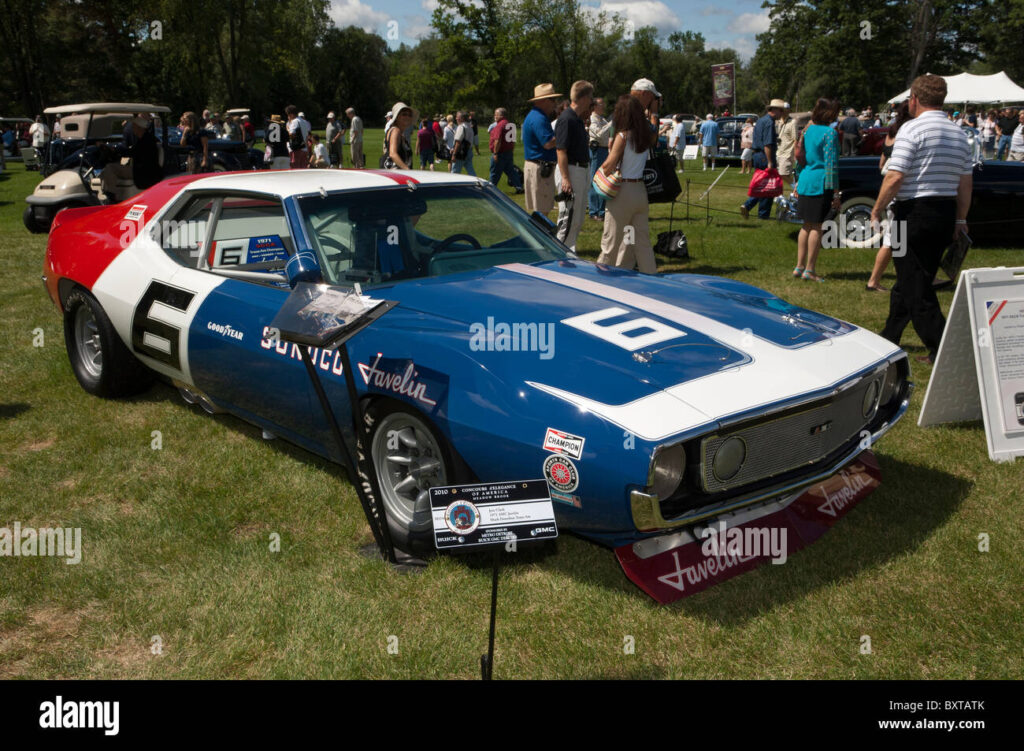
Today, while classic car shows are filled to the brim with predictable Mustangs and Camaros, the 1971 AMC Javelin remains the ultimate choice for the enthusiast who wants to stand out. It represents a brief, beautiful moment when a smaller independent automaker looked the giants in the eyes and refused to back down.
If you’re hunting for a high-quality survivor or a solid restomod candidate, checking classic registries and specialty classic dealers like AutoFarmUSA is a great place to start your journey. Because AMC produced fewer units than Ford or Chevy, finding an intact, un-rusted 1971 specimen is becoming a rare and highly rewarding classic car victory.
For a deeper dive into the engineering secrets of this muscle car era anomaly, you can watch AMC Outlaw 1971 Javelin AMX 401 EXPOSED The SHOCKING Truth to see exactly how AMC managed to sneak a race-ready, forged-internal engine past the auto industry’s strict regulations.
You must be logged in to post a comment.
